


Laser Guided Missile Seminar Report
Do not mirror.exe. This report is a case study that examines the development and acquisition. Laser-guided bomb prototype and received proposals from the Autonetics. Seminar on the Implications of Precision-Guided Munitions: Vol.
Laserguidanceis a technique of guiding a missile or other projectile or vehicleto a target by means of a laser beam. Some laser guided systems utilize beamriding guidance, but most operate more similarly to semi-active radar homing(SARH). This technique is sometimes called SALH, for Semi-ActiveLaser Homing. With this technique, a laser is kept pointed at the targetand the laser radiation bounces off the target and is scattered in alldirections (this is known as “painting the target”, or “laser painting”). Themissile, bomb, etc. Is launched or dropped somewhere near the target.
When itis close enough that some of the reflected laser energy from the target reachesit, a laser seeker detects which direction this energy is coming from andadjusts the projectile trajectory towards the source. As long as the projectileis in the general area and the laser is kept aimed at the target, theprojectile should be guided accurately to the target. Missiles differ from rockets by virtue of a guidance systemthat steers them towards a pre-selected target. Unguided, or free-flight,rockets proved to be useful yetfrequently inaccurate weapons when fired from aircraft during the World War II. This inaccuracy, often resulting inthe need to fire many rockets to hit a single target, led to the search for ameans to guide the rocket towards its target. The concurrent explosion of radio-wave technology(such as radar and radio detection devices) provided the first solution to thisproblem.
Several warring nations, including the United States, Germany and Great Britain mated existing rocket technologywith new radio- or radar-based guidance systems to create the world's firstguided missiles. Although these missiles were not deployed in large enoughnumbers to radically divert the course of the World War II, the successes thatwere recorded with them pointed out techniques that would change the course offuture wars. Thus dawned the era of high-technology warfare, an era that wouldquickly demonstrate its problems as well as its promise. The problems centered on the unreliability of the newradio-wave technologies. The missiles were not able to hone in on targetssmaller than factories, bridges, or warships.
Circuits often proved fickle andwould not function at all under adverse weather conditions. Another flawemergedas jamming technologies flourished in response to the success of radar.Enemy jamming stations found it increasingly easy to intercept the radio orradar transmissions from launching aircraft, thereby allowing these stations tosend conflicting signals on the same frequency, jamming or'confusing' the missile. Battlefield applications for guidedmissiles, especially those that envisioned attacks on smaller targets, requireda more reliable guidance method that was less vulnerable to jamming.Fortunately, this method became available as a result of an independentresearch effort into the effects of light amplification. Theodore Maiman built the first laser (LightAmplification by Stimulated Emission of Radiation) at Hughes ResearchLaboratories in 1960. The military realized the potential applications forlasers almost as soon as their first beams cut through the air.
Laser guidedprojectiles underwent theirbaptism of fire in the extended series of air raids that highlighted theAmerican effort in the Vietnam War. The accuracy of these weapons earned themthe well-known sobriquet of 'smart weapons.' But even this newgeneration of advanced weaponry could not bring victory to U.S. Forces in thisbitter and costly war. However, the combination of experience gained in, refinements in lasertechnology, and similar advances in electronics and computers, led to moresophisticated and deadly laser guided missiles. They finally receivedwidespread use in Operation Desert Storm, where their accuracy and reliabilityplayed a crucial role in the decisive defeat of Iraq's military forces.
Thus,the laser guided missile has established itself as a key component in today'shigh-tech military technology. Semi-active radar homing, or SARH, is a common type of missile guidance system,perhaps the most common type for longer range airto air and systems.The name refers to the fact that the missile itself is only a –provided by an external (“off board”) source — as it reflects off the target.
The basic concept of SARH is thatsince almost all detection and tracking systems consist of a system, duplicating this hardware onthe missile itself is redundant. In addition, the of aradar is strongly related to the physical size of the antenna, and in the smallnose cone of a missile there isn't enough room to provide the sort of accuracyneeded for guidance. Instead the larger radar dish on the ground or launchaircraft will provide the needed signal and tracking logic, and the missilesimply has to listen to the signal reflected from the target and point itselfin the right direction.
Additionally, the missile will listen rearward to thelaunch platform's transmitted signal as a reference, enabling it to avoid somekinds of radar jamming distractions offered by the target. Contrast this withsystems, in which the radar is pointed at the target and the missile keepsitself centered in the beam by listening to the signal at the rear of themissile body. In the SARH system the missile listens for the reflected signalat the nose, and is still responsible for providing some sort of “lead”guidance. The disadvantages are twofold: One is that a radar signal is “fanshaped”, growing larger, and therefore less accurate, with distance. This meansthat the beam riding system is not accurate at long ranges, while SARH islargely independent of range and grows more accurate as it approaches thetarget, or the source of the reflected signal it listens for.
Anotherrequirement is that a beam riding system must accurately track the target athigh speeds, typically requiring one radar for tracking and another “tighter”beam for guidance. The SARH system needs only one radar set to a wider pattern. The fuzing and firing system is normally located in or nextto the missile's warhead section. It includes those devices and arrangementsthat cause the missile's payload to function in proper relation to the target.The system consists of a fuze, a safety and arming (S&A) device, atarget-detecting device (TDD), or a combination of these devices. There are twogeneral types of fuzes used in guided missiles—proximity fuzes and contactfuzes. Acceleration forces upon missile launching arm both fuzes.
Arming isusually delayed until the fuze is subjected to a given level of acceleratingforce for a specified amount of time. In the contact fuze, the force of impactcloses a firing switch within the fuze to complete the firing circuit,detonating the warhead. Where proximity fuzing is used, the firing action isvery similar to the action of proximity fuzes used with bombs androckets. TDDs are electronic detecting devices similar to thedetecting systems in VT fuzes.
They detect the presence of a target anddetermine the moment of firing. When subjected to the proper target influence,both as to magnitude and change rate, the device sends an electrical impulse totrigger the firing systems. The firing systems then act to fire an associatedS&A device to initiate detonation of the warhead. Air-to-air guidedmissiles are normally fuzed for a proximity burst by using a TDDwith an S&Adevice.
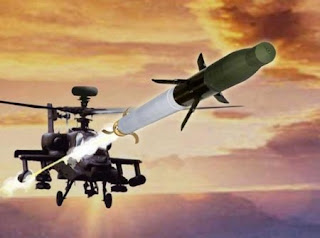
In some cases, a contact fuze may be used as a backup. Air-to-surfaceguided missile fuzing consists of influence (proximity) and/or contact fuzes.Multifuzing is common in these missiles. A laser guided missile consists of four importantcomponents, each of which contains different raw materials. These fourcomponents are the missile body, the guidance system (also calledthe laser and electronics suite), the propellant, and the warhead.The missile body is made from steel alloys or high-strength aluminum alloysthat are often coated with chromium along the cavity of the body in order toprotect against the excessive pressures and heat that accompany a missilelaunch.
Laser Guided Missile Seminar Report 2017
The guidance system contains various types of materials—some basic,others high-tech—that are designed to give maximum guidance capabilities. These materials include a photo detecting sensor and opticalfilters, with which the missile can interpret laser wavelengths sent from aparent aircraft. The photo detecting sensor's most important part is itssensing dome, which can be made of glass, quartz, and/or silicon. A missile'selectronics suite can contain gallium-arsenide semiconductors, but some suitesstill rely exclusively on copper or silver wiring. Guided missiles usenitrogen-based solid propellants as their fuel source.
Precision Guided Munitions Ppt
Certain additives (suchas graphite or nitroglycerine) can be included to alter the performance of thepropellant. The missile's warhead can contain highly explosive nitrogen-basedmixtures, fuel-air explosives (FAE), or phosphorous compounds. The warhead istypically encased in steel, but aluminum alloys are sometimes used as asubstitute.