


Virtual Usb Drive Mac
Do you have an OS installed on your USB thumb drive? Booting from it in a VM is now possible, you’ll just have to use a simple trick to get it to work.Last week we showed you how to, and we also discussed working with VMware Player (our favourite VM Client). But have you ever tried booting from a USB drive in VMWare? It doesn’t allow doing so, but we will force it to boot from a USB, with a bit of old geekery.If you remember, we have showed you how to even if your old PC doesn’t allow booting from one. That’s right, using Plop Boot Manager. All we need to do is to load the Plop ISO in VMware, attach and enable the USB drive in VMware, and finally select the USB option in Plop Boot Manager to boot from the USB. So, visit the.Click Download, download the latest version, save it in a location, and unzip it.
The file named “plpbt.iso” is the one we need to use.Open VMware, select “Create a new Virtual machine”In the window that opens, select “Installer Disc image file”, browse to the Plop ISO and select it. VMware will ask you to specify an Operating System. Click next to continueSelect Linux as the Guest Operating System, and from the list of versions, select Ubuntu (or if you have a different OS, select it and its version). Specify the name of the VM and the destination where it will be saved.On the next screen, select “Store Virtual Disk as single file”, and allot 5 GB to it, since we will be booting from the USB drive, and not actually doing an install. Click NextOn the final screen, you’ll see the hardware resources automatically allocated for this particular VM.Make sure that USB is enabled, and if it isn’t, click “Customize Hardware”, click the USB Controller device, and check the first two options.
Click OK to continue.Make sure your USB drive with a bootable OS is attached. Start the VM, you’ll boot into Plop. First, right click the USB icon on the bottom right corner of VMware Player, and click Connect (Disconnect from Host). Wait a couple of seconds, then click inside the Window, and select the USB option using the arrow keys on your keyboard.And now you’ll be booting into your OS from the USB. Not only you can boot into Ubuntu from a bootable USB, but you can boot into any bootable OS using this method (DSL, Puppy, or even Windows Installation ISO, whatever bootable OS you have on the USB). Not quite handy perhaps, but still geeky!
Virtual Usb Emulator
USB does not detecting in oracle virtualbox on mac OS closed. I have also founnd that some USB drives work better when plugged into a USB port on the computer its self rather than plugging it into a USB hub. Share improve this answer. Answered Sep 18 '17 at 15:15.
Usb Drive In Virtual Machine
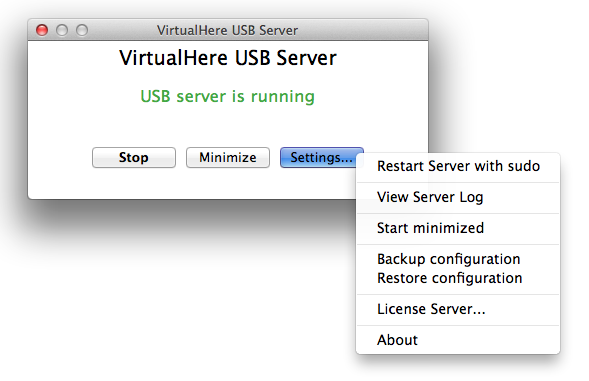
The VirtualHere USB Client runs on Windows, OSX, Linux and Android. Juragan 21. The client was created to be intuitive and extremely easy to use. The client needs to be run on any machine that wants to use USB devices shared by the VirtualHere USB Server.Simply click the link below, save the downloaded file to the Desktop, and run. For advanced users, the client can run as a run as a, and is controllable using an and supportsThe software will automatically find USB devices shared by VirtualHere USB Servers on the network. Available USB devices will be displayed in a tree. Right click on the device you want to use and select Use.
It will then appear to be directly connected to your machine and can be used just like a local device!Windows:OSX:Linux:Please click on a link below to download: Version 4.7.8 WINDOWS:OSX:LINUX GUI:VirtualHere USB Client for Linux uses the built-in Linux usbip driver. (It is recommended to use the latest kernel (4.9+) for maximum compatibility)Most linux versions have this compiled and enabled, if not see.If you want to run the VirtualHere USB Client for Linux with a Graphical User Interface (GUI) choose from the following clients:LINUX AND ANDROID CONSOLE MODE:If you want to run VirtualHere USB Client for Linux in console only mode, choose from the following filesBecause the console client is 100% statically compiled and requires no runtimes it will run in any edition of Linux AND ANDROID that has usbip compiled in.See.